 (660) 528-1590
 (+91) 995-358-1277

























































































Medical Coding, Billing & RCM Services Built to Improve Accuracy, Reduce Denials, and Protect Revenue
Bluethink Inc gives US providers and payers a coding and billing partner they can put in front of a RADV auditor, a CMS reviewer, or a denial letter without flinching. Certified coders, documented QA, and a team that tells you when something's wrong before it costs you.
HIPAA-compliant workflows · AAPC-certified coders · Serving US practices, ACOs, and health plans
- HIPAA-compliant systems and workplaces
- AAPC and AHIMA-certified coding staff
- ICD-10-CM, CPT, and HCPCS coding
- CMS-HCC and HHS-HCC risk models
- Dedicated QA and audit-readiness review
Three services, one accountable team
Use us for one piece of the revenue cycle or all three. Either way, the same coders who touch the chart are accountable for what happens to the claim afterward.
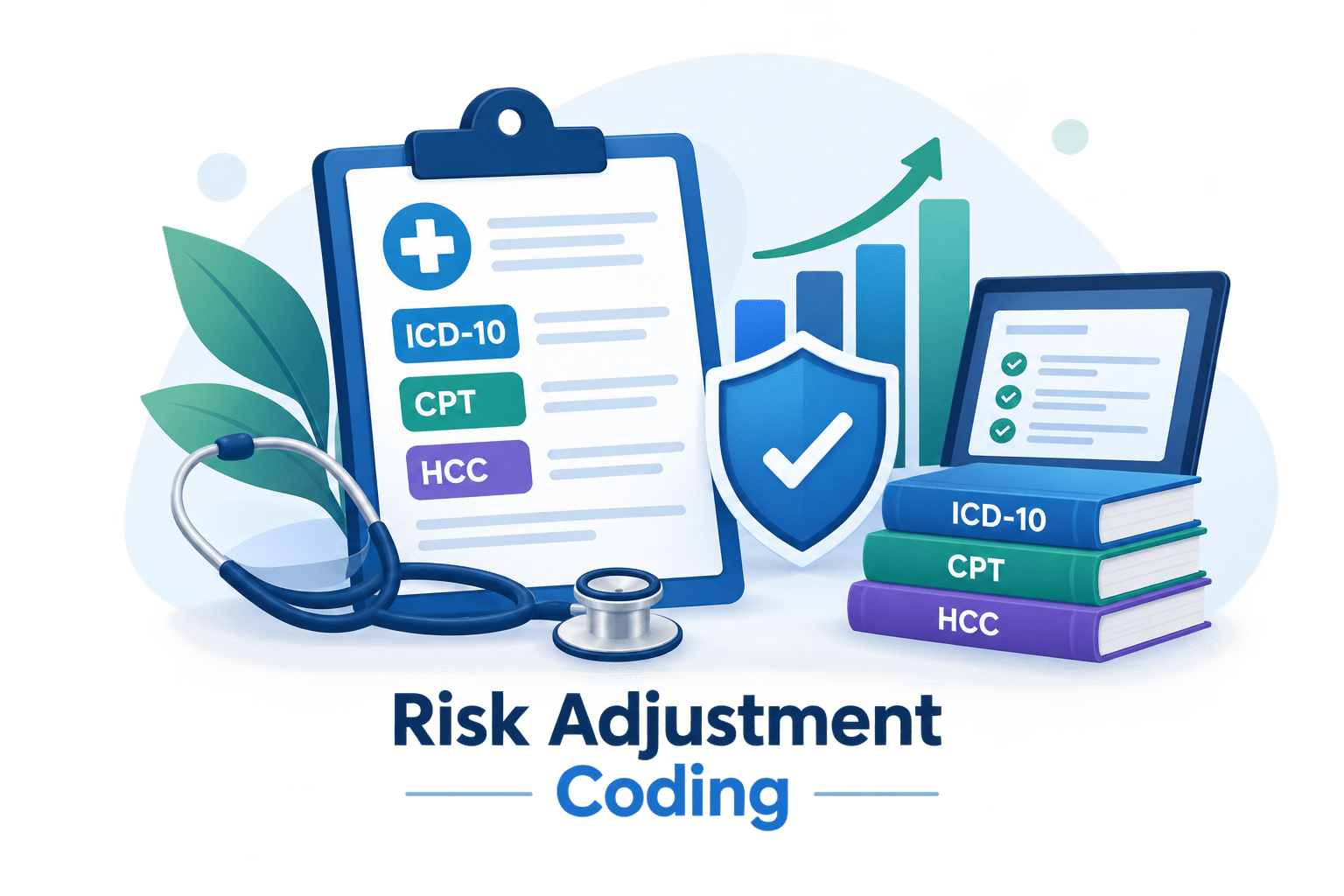
Risk adjustment coding

Risk scores are only as good as the documentation behind them. We read the chart the way an auditor will, not the way a claim wants us to.
Our HCC coders perform prospective and retrospective chart review, confirm that every reported condition is supported by clinical documentation, and flag suspected but undocumented conditions for provider query. We map diagnoses to CMS-HCC and HHS-HCC categories, reconcile claims data against chart-level findings, and prepare your organization for RADV audits before CMS asks for the chart.
Medical coding services

Accurate coding is the difference between a clean claim and a denial three weeks later. We treat every chart like it's going to be reviewed.
Our coders assign diagnosis and procedure codes from encounter notes, operative reports, and superbills across ICD-10-CM, CPT, and HCPCS. Every chart is checked against current NCCI edits and payer-specific local coverage rules, and a sample of completed work is audited weekly so drift gets caught before it becomes a pattern.
Medical billing services

Billing is where good coding either pays off or gets undone by a rejected claim. We manage the whole path from submission to posted payment.
We verify eligibility before the visit, submit clean claims, and follow every claim through adjudication. When a claim is denied, we work it — correct, appeal, and resubmit — instead of writing it off. You get transparent aging reports and a team that calls out payer patterns worth fixing upstream.
How a chart moves through Bluethink
The same five steps run whether it's a single encounter or a full-panel risk adjustment sweep.
Intake
Charts, claims data, or superbills arrive through a secure, HIPAA-compliant channel.
Coding
A certified coder assigns or validates codes against the clinical documentation.
QA review
A second coder audits the chart independently before anything is finalized.
Delivery
Coded charts or clean claims are returned with findings and any provider queries.
Feedback loop
Error patterns and denial trends are reported back so the next batch improves.
What that discipline gets you
Specialties we code and bill for
If your specialty isn't listed, ask — most coding teams cross-train across two or three related specialties.
What a validated chart looks like
Every encounter we touch goes through the same discipline: codes checked against the note, conditions confirmed against documentation, and a second coder signing off before anything ships. Here's what that looks like on a single encounter.
Questions we hear most
Grouped by service, in case you're only weighing one piece of the work right now.

Risk adjustment coding What is risk adjustment coding, and why does it matter for our plan?
Risk adjustment coding How do you decide which suspected conditions go back to the provider?
Medical coding services Which specialties do your coders handle?
Medical coding services How do you keep up with NCCI edits and payer-specific rules?
Medical billing services How do you handle a denied claim?
Medical billing services Do you verify eligibility before the visit or after?
Get a free coding accuracy review
Send us 20 recent charts. We'll show you exactly where coding or documentation is leaving revenue or risk-score accuracy on the table — no cost, no obligation.